June 5, 2026 · 7 min read
Kitchen Deep Clean Tips From a Professional Crew
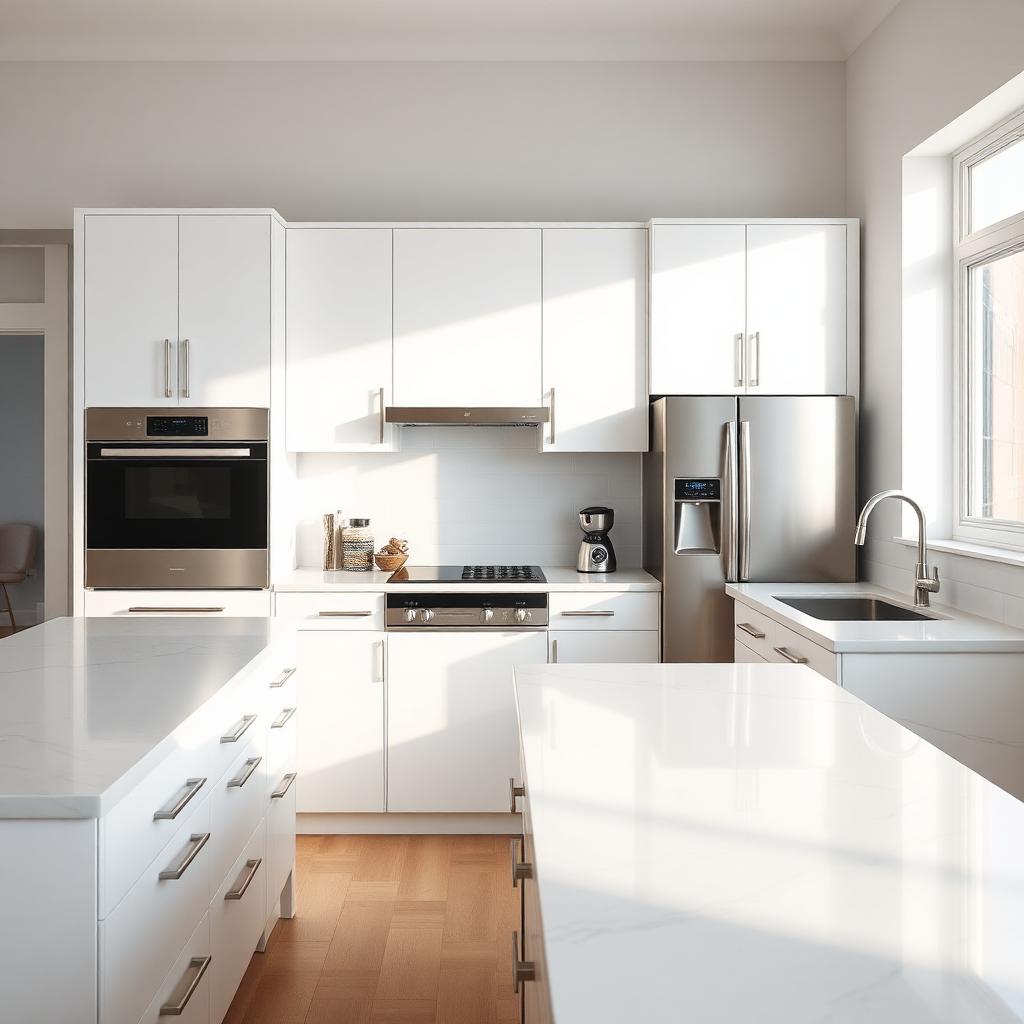
The kitchen is the single highest-effort room in any deep cleaning. It also has more dependencies than any other room — the dishwasher needs to run while you work on the cabinets, the oven self-cleans while you scrub the range hood, the sink needs to stay clear because every dirty rag ends up in it. Order matters, and the right order can cut the total work by about 30%.
Here is the sequence our two-person crews use on a deep clean kitchen in Avon, Avon Lake, and Westlake homes.
Phase 1 — Start the long timers
Before anything else, start the things that run on their own. Pull the oven racks, drop them in the bathtub with hot water and a degreaser, and start the oven self-clean cycle (modern ovens take 2–4 hours). Load any dishes into the dishwasher, add a dishwasher cleaner tablet to the detergent cup, and start it. Spray the inside of the microwave with a degreaser, close it, and let it dwell for 10 minutes while you move on.
Phase 2 — Top down on cabinets and range hood
Always clean top down so debris falls onto surfaces you have not cleaned yet. Start with the cabinets above the range — they catch the most grease. Spray with a citrus degreaser at label dilution, let it dwell for 60 seconds, then wipe with a microfiber. Repeat for the rest of the upper cabinets, then the range hood underside and the filter. The filter goes in the dishwasher with the next cycle.
Then the lower cabinet faces, then the toe-kicks. Toe-kicks are usually skipped in regular cleaning and they hold months of food debris and dust.
Phase 3 — Counters, backsplash, and small appliances
Move every small appliance off the counter. Wipe each one — toasters, coffee makers, and stand mixers all carry crumbs and splatter that never get touched in weekly cleaning. Wipe the counter underneath with a degreaser, then the backsplash. Pay attention to grout lines on tile backsplashes — a soft toothbrush and a paste of baking soda and hydrogen peroxide will lift most stains.
Polish stainless appliance fronts with the grain, not against it. A microfiber slightly damp with water removes 90% of fingerprints; finish with a few drops of mineral oil on a dry cloth for streak-free shine.
Phase 4 — Refrigerator
Empty the refrigerator one shelf at a time onto the counter (which is now clean). Pull each shelf and drawer and wash in the sink with warm soapy water. Wipe the interior walls and door gaskets with a baking soda solution — it neutralizes odors without leaving a scent. Vacuum the coils on the back or underneath, and pull the fridge forward to vacuum and mop the floor behind it.
Toss anything expired. Wipe every jar before it goes back in.
Phase 5 — Sink, disposal, and floor
By now the dishwasher has finished and the sink is empty. Scrub the sink with a non-scratch pad and a baking soda paste. Drop a half-lemon and a handful of ice into the disposal, run it for 10 seconds, then flush with cold water — the ice scrubs the blades and the lemon deodorizes.
Floors last, always. Sweep, then mop with a flat microfiber pad. In Avon homes with engineered hardwood transitions between the kitchen and dining room, use a barely-damp pad and dry the seam line with a separate dry cloth.
Phase 6 — Reassemble
Pull the oven racks from the bathtub, rinse, and reinstall once the self-clean cycle is done and the oven has cooled. Wipe the oven interior with a damp microfiber to pick up the ash residue self-clean leaves behind. Return the small appliances to the counter — but reconsider which ones actually earn counter space.
How long it takes
A full deep-clean kitchen on a 2,000-square-foot Avon home takes our two-person team about 90 minutes to 2 hours when the kitchen has not been deep-cleaned in 12+ months. Subsequent deep cleans drop to 45–60 minutes because the baseline is better. Our deep cleaning service includes this full kitchen scope, and our recurring house cleaning maintains it between deep cleans.
Related services and service areas
Cities we serve