June 5, 2026 · 8 min read
Hardwood Floors and Lake-Effect Humidity in Northeast Ohio
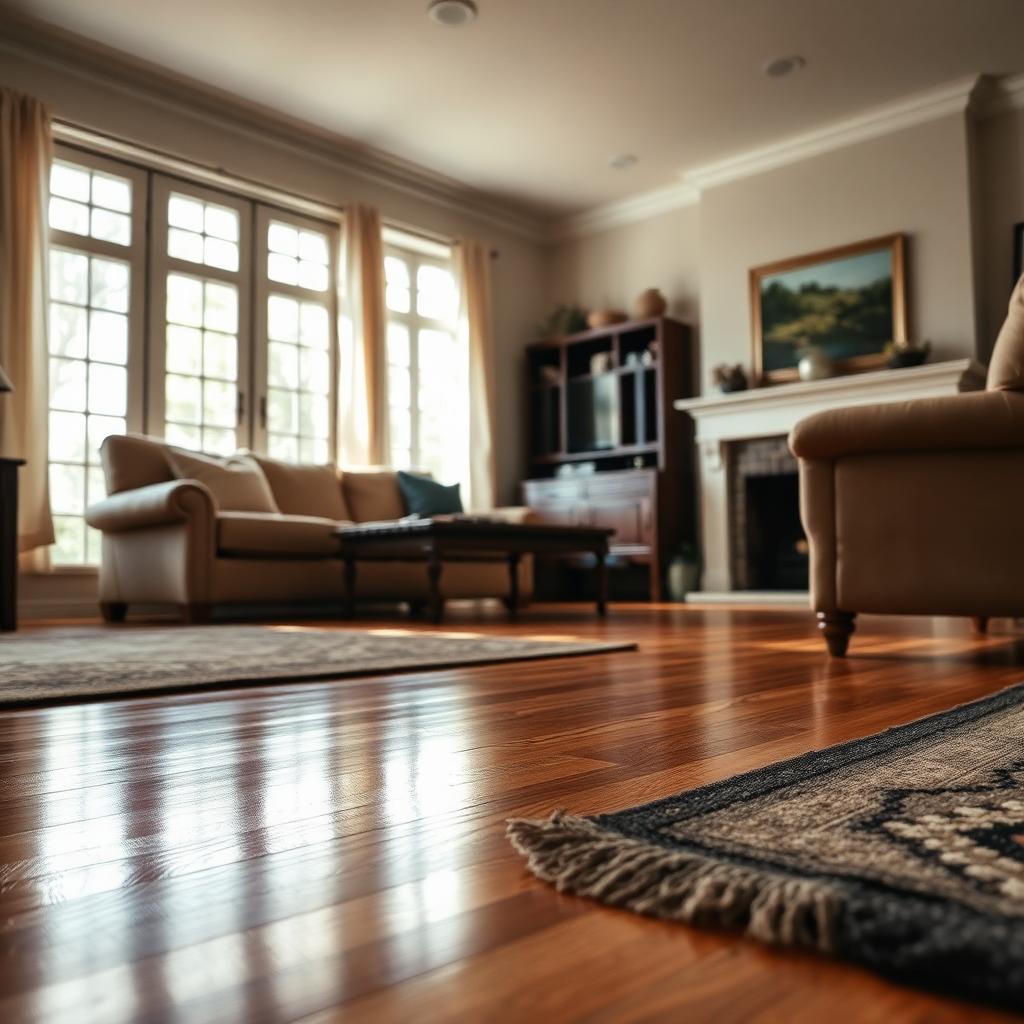
Hardwood floors within five miles of Lake Erie live a harder life than hardwood anywhere else in Ohio. Summer humidity off the lake regularly pushes indoor relative humidity above 60% in homes without dehumidifiers, and winter heating drops it below 25%. That 35-point annual swing is exactly what hardwood manufacturers warn against — and it is the leading cause of cupping, gapping, and finish failure in homes across Avon Lake, Bay Village, Sheffield Lake, and the older parts of Westlake.
What lake-effect humidity does to a hardwood floor
Wood is hygroscopic — it absorbs and releases moisture in response to the air around it. When summer humidity climbs, each board expands across its width. The boards push against each other, and the edges lift slightly: cupping. When winter heat dries the air, the boards shrink and pull apart: gapping. Repeat this for ten years and the finish at every joint cracks, water seeps in, and the floor stains darker along the seams.
The damage is worse in homes built before 2000 because the subfloor is usually solid plywood without modern moisture barriers. It is worst in lakefront homes where summer humidity sits 5–8 points higher than inland Avon all summer.
The cleaning mistake that accelerates the damage
Most homeowners clean hardwood with a wet mop and a generic floor cleaner. On a humid August day in Bay Village, that adds another 200–300ml of water to a floor that is already at the edge of its moisture tolerance. Within two hours the water has soaked into every micro-crack at the joints. Within two months you can see the dark staining start.
The other common mistake is vinegar. Vinegar is acidic, and most modern engineered hardwood and many factory-finished solid hardwood floors have a urethane top coat that vinegar slowly etches. After a few years of vinegar mopping, the finish goes flat in the high-traffic lanes — kitchen, hallway, in front of the couch.
Our low-moisture protocol
Our recurring crews use a specific low-moisture method on every hardwood floor in our service area, and we tighten it further on lakefront homes from May through September. The protocol has four steps.
- Dry-vacuum first with a soft-bristle hardwood attachment — never a beater bar
- Spot-treat sticky spots with a damp microfiber and a pH-neutral cleaner
- Damp-mop with a flat microfiber pad that is wrung out until it leaves no visible film
- Air-dry with the ceiling fan on low and the HVAC running — the floor should look dry within 90 seconds of the pad passing over it
What you can do between visits
Run a whole-house dehumidifier from June through September and aim for indoor relative humidity between 35% and 50%. A $40 hygrometer from the hardware store tells you whether you are in range. In winter, run a whole-house humidifier on the furnace to keep humidity above 30% — otherwise the floor dries out and gaps open.
Add walk-off mats at every entry. Lake-area homes track in more grit than inland homes, and grit is what scratches the finish in the first place. Replace the mats when they stop visibly catching debris.
Wipe spills within minutes, not hours. The finish on most modern hardwood is rated for occasional moisture, not standing water.
When to refinish instead of clean
If the finish has gone flat in the traffic lanes, if water beads no longer form when you drip water on the boards, or if the joints are visibly stained darker than the board faces, cleaning will not bring the floor back. At that point a screen-and-recoat (about $1.50–$2.50 per square foot locally) will restore the protective layer. We do not do refinishing, but we will tell you honestly when a floor is past the point cleaning helps.
For ongoing care, our recurring house cleaning service uses this protocol on every visit, and our deep cleaning service includes a deeper hardwood pass on the first appointment.